
Joseph and the Mystery of Redemption
Joseph’s story is one of betrayal, injustice, suffering, and redemption. Sold into slavery by his own brothers, falsely accused, and forgotten in prison, Joseph nevertheless arrives at one of the most profound conclusions in Scripture: “You meant evil against me, but God meant it for good.” This insight explores suffering, forgiveness, divine providence, and the mysterious way God transforms human evil into redemption.
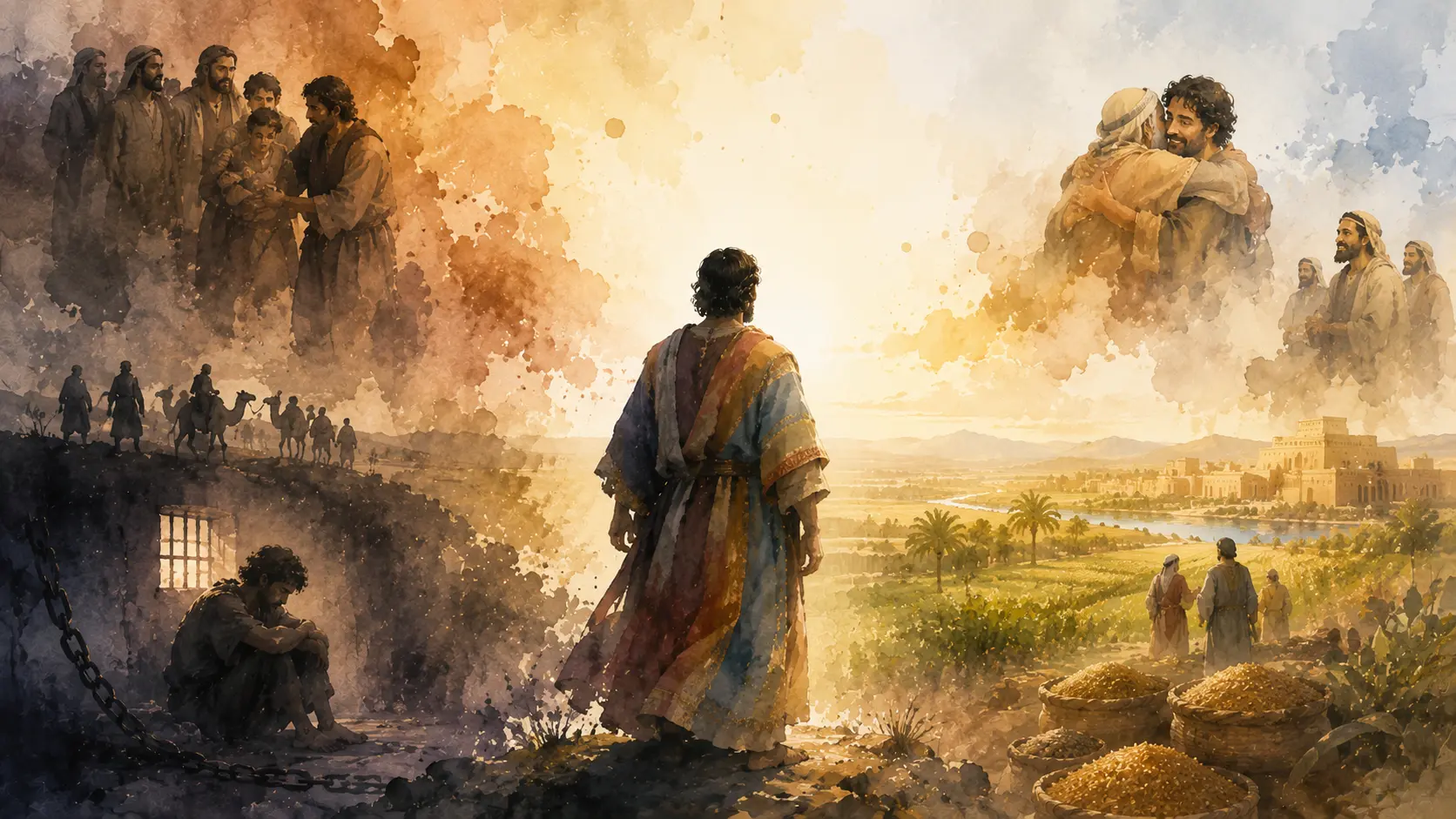
The story of Joseph is one of the clearest biblical explorations of suffering and redemption.
Joseph is betrayed not by strangers, but by his own brothers. Jealousy turns into hatred. Hatred turns into violence.
He is thrown into a pit, sold into slavery, separated from his father, falsely accused, imprisoned, and forgotten.
At every stage of the story, Joseph experiences circumstances that appear senseless and unjust.
Yet Genesis ultimately reveals that beneath the chaos of human action, another pattern was unfolding.
A providence hidden beneath suffering itself.
One of the most psychologically profound aspects of Joseph’s story is that suffering does not make him bitter. Pain often creates two paths within the human soul: resentment or transformation. Joseph could have devoted his life to revenge. He possessed the power to destroy the very brothers who betrayed him. Instead, he chooses forgiveness. This is not weakness. It is spiritual maturity. Forgiveness does not deny evil. Joseph explicitly states: “You meant evil against me.” The wrongdoing remains real. But Joseph also perceives something beyond the immediate event: that God can transform even human cruelty into redemption.
Genesis 50:20 presents one of Scripture’s deepest theological insights:
Human beings possess genuine freedom and are capable of genuine evil. Yet God remains sovereign even over the brokenness of history.
This does not mean God authors sin or delights in suffering.
Rather, it means evil does not possess ultimate authority.
What appears chaotic from the human perspective may still be woven into a larger providential design that cannot yet be fully seen.
Joseph’s imprisonment becomes the pathway to influence. His suffering becomes preparation. His humiliation becomes elevation.
The very thing intended to destroy him becomes the thing that positions him to save others.
There is also a deeply psychological dimension to Joseph’s journey.
Many people become trapped inside the memory of injustice. The mind continually revisits betrayal, humiliation, abandonment, and pain.
Over time, suffering can harden into identity.
But Joseph refuses to define himself by what was done to him.
Instead of allowing trauma to become his final reality, he interprets his suffering through trust in God’s providence.
This changes everything.
Because meaning transforms suffering.
Pain without meaning produces despair. Pain integrated into a greater purpose produces endurance, wisdom, and spiritual depth.
Joseph’s story also reveals the relationship between humility and trust. Throughout his trials, Joseph repeatedly surrenders control over outcomes. He remains faithful in obscurity. Faithful in prison. Faithful in suffering. Modern culture often associates power with self-assertion, revenge, or domination. Joseph reveals another kind of strength: the ability to remain righteous without becoming consumed by bitterness. Patience becomes an act of faith.
The culmination of Joseph’s story is not his rise to power.
It is reconciliation.
The emotional climax occurs when Joseph weeps before the brothers who betrayed him.
This moment reveals one of Scripture’s deepest truths: redemption is greater than revenge.
Joseph understands that had he remained consumed by resentment, he would have become psychologically imprisoned long after leaving the physical prison behind.
Forgiveness becomes liberation.
Not because evil was insignificant, but because grace is greater.
You meant evil against me, but God meant it for good.” Few verses capture the mystery of redemption more powerfully than this. The story of Joseph does not teach that suffering is easy. Nor does it suggest that evil is unreal. It teaches something deeper: that God can enter even the darkest chapters of human life and transform them into instruments of healing, wisdom, salvation, and restoration. Human beings may wound one another. But evil does not write the final sentence of the story.
The app behind these insights
About Illumen Scripture
Illumen Scripture is a Bible reading and study app built to help you engage Scripture with clarity, context, and reflection. Read with maps and timelines, take notes, explore AI-assisted study tools, and follow Illumen Insights—articles like this one—in a single, focused reading experience on web and iOS.
Be the first to know when
we publish new insights.
No spam, unsubscribe anytime.