
Death and Life Are in the Power of the Tongue
Scripture’s claim that “death and life are in the power of the tongue” is often treated as metaphorical language. Yet both theology and modern neuroscience suggest something far deeper: words are not merely expressions of thought, but forces that shape identity, emotion, biology, and human relationships. This insight explores the psychological, spiritual, and neurological power of speech — and why Scripture treats words as causally significant in the formation of reality itself.
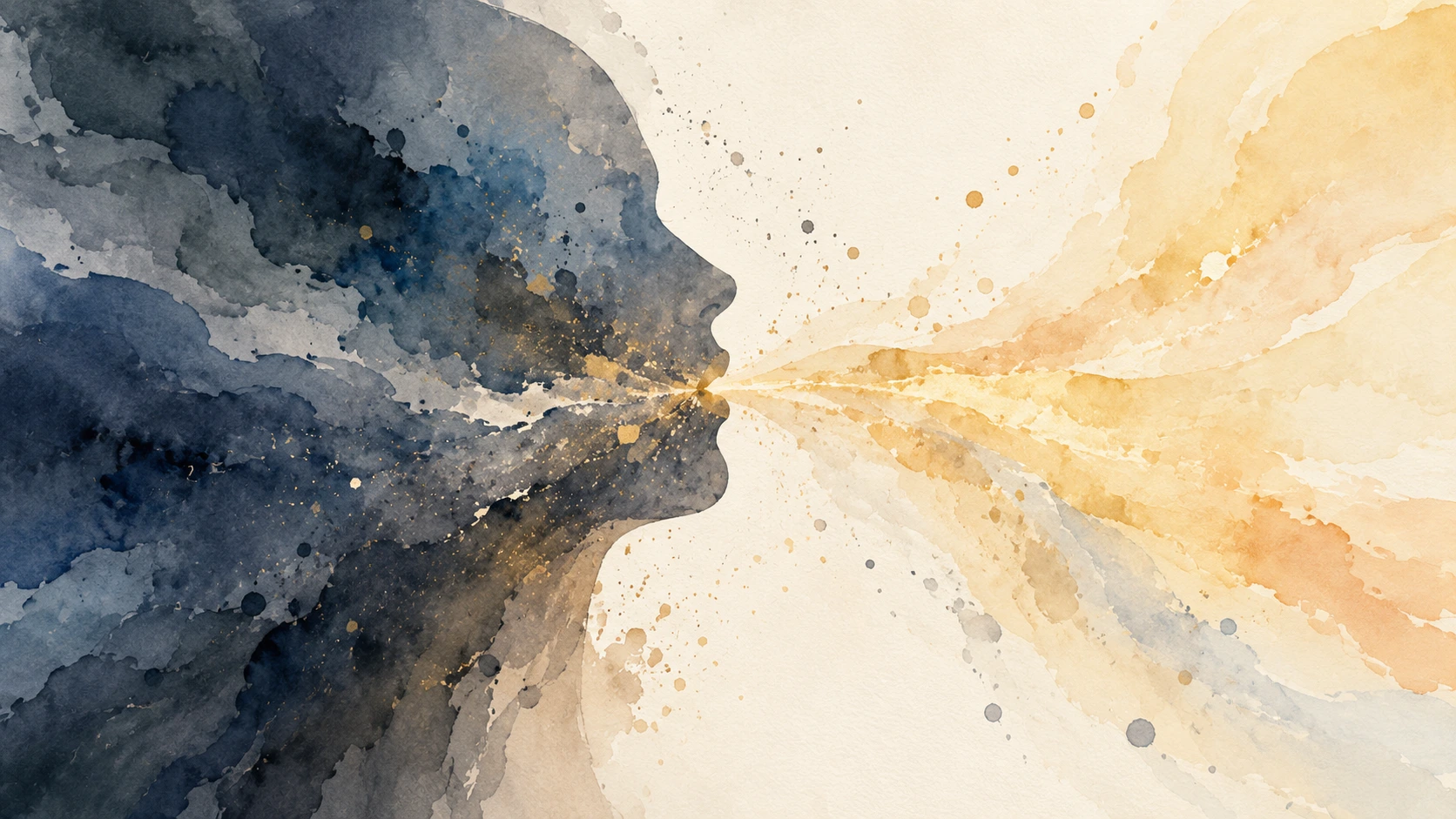
“Death and life are in the power of the tongue: and they that love it shall eat the fruit thereof.”
Modern culture often reduces language to communication alone.
Words are viewed primarily as tools for conveying information, expressing emotion, or describing reality. Within this framework, speech is considered secondary to action — something symbolic rather than causally significant.
Scripture presents a radically different view.
The biblical tradition treats speech not merely as descriptive, but as formative. Words do not simply reflect reality; they participate in shaping it.
This is why Proverbs declares:
“Death and life are in the power of the tongue.”
At first glance, the statement appears poetic. Yet beneath its poetic form lies a profound claim concerning the structure of human existence itself.
The Bible consistently portrays speech as possessing creative and destructive capacity. In Genesis, creation itself emerges through divine speech: “Let there be light.” Words become the bridge between the invisible and the visible — between intention and manifestation. Human speech operates as a lesser reflection of this same principle. Language externalizes inner reality. Belief becomes articulated through words, and articulated words begin shaping both the speaker and the surrounding world.
Contemporary neuroscience increasingly supports what Scripture articulated centuries ago.
Language measurably affects neurological structure, emotional regulation, hormonal responses, and identity formation.
A child repeatedly exposed to contempt, ridicule, or verbal hostility often develops heightened stress sensitivity, distorted self-perception, and long-term patterns of anxiety or emotional dysregulation. These effects occur even in the absence of physical violence.
Words alone are capable of reshaping the nervous system.
This reveals something deeply significant: information is not neutral.
Though words possess no physical substance, they alter physical structures within the brain itself. Neural pathways reorganize according to repeated patterns of speech and interpretation.
Meaning shapes biology.
This understanding also illuminates the biblical concept of generational sin.
When Scripture speaks of “the sins of the fathers,” it does not merely describe arbitrary punishment transferred across generations. Rather, it describes the transmission of psychological and spiritual patterns through human relationships.
A father whose speech is cruel passes more than emotional pain to his children. He transmits a framework through which reality itself is interpreted.
The child learns what love sounds like. What authority feels like. What safety means.
Unless consciously interrupted, these internal structures are often reproduced in future generations.
Trauma therefore persists not only through events, but through patterns of language, emotional atmosphere, and relational conditioning.
Within biblical thought, sin is not merely rule-breaking.
Sin represents a form of disorder — a misalignment between human behavior and the deeper structure of reality established by God.
Speech participates in this order.
Words rooted in hatred, deceit, humiliation, or contempt fracture both the individual and the community. Conversely, truth spoken with wisdom and love possesses restorative power.
Language can disorder the soul. It can also heal it.
This gives deeper meaning to Christ’s statement:
“The words that I speak unto you, they are spirit, and they are life.”
Christ is not presenting language as mere metaphorical inspiration. He is making a profound ontological claim: that truth itself possesses life-giving power.
His words reorder the inner world of the person who receives them.
And because human beings act outwardly according to inward structure, transformed consciousness eventually reshapes external reality as well.
The transformation begins internally before it becomes visible externally.
“Death and life are in the power of the tongue.” What Scripture described spiritually, psychology and neuroscience increasingly observe biologically. Speech shapes perception. Perception shapes identity. Identity shapes behavior. Behavior shapes reality. Every word therefore participates in creation. The question is not whether speech has power. The question is what kind of world our words are creating.
The app behind these insights
About Illumen Scripture
Illumen Scripture is a Bible reading and study app built to help you engage Scripture with clarity, context, and reflection. Read with maps and timelines, take notes, explore AI-assisted study tools, and follow Illumen Insights—articles like this one—in a single, focused reading experience on web and iOS.
Be the first to know when
we publish new insights.
No spam, unsubscribe anytime.